


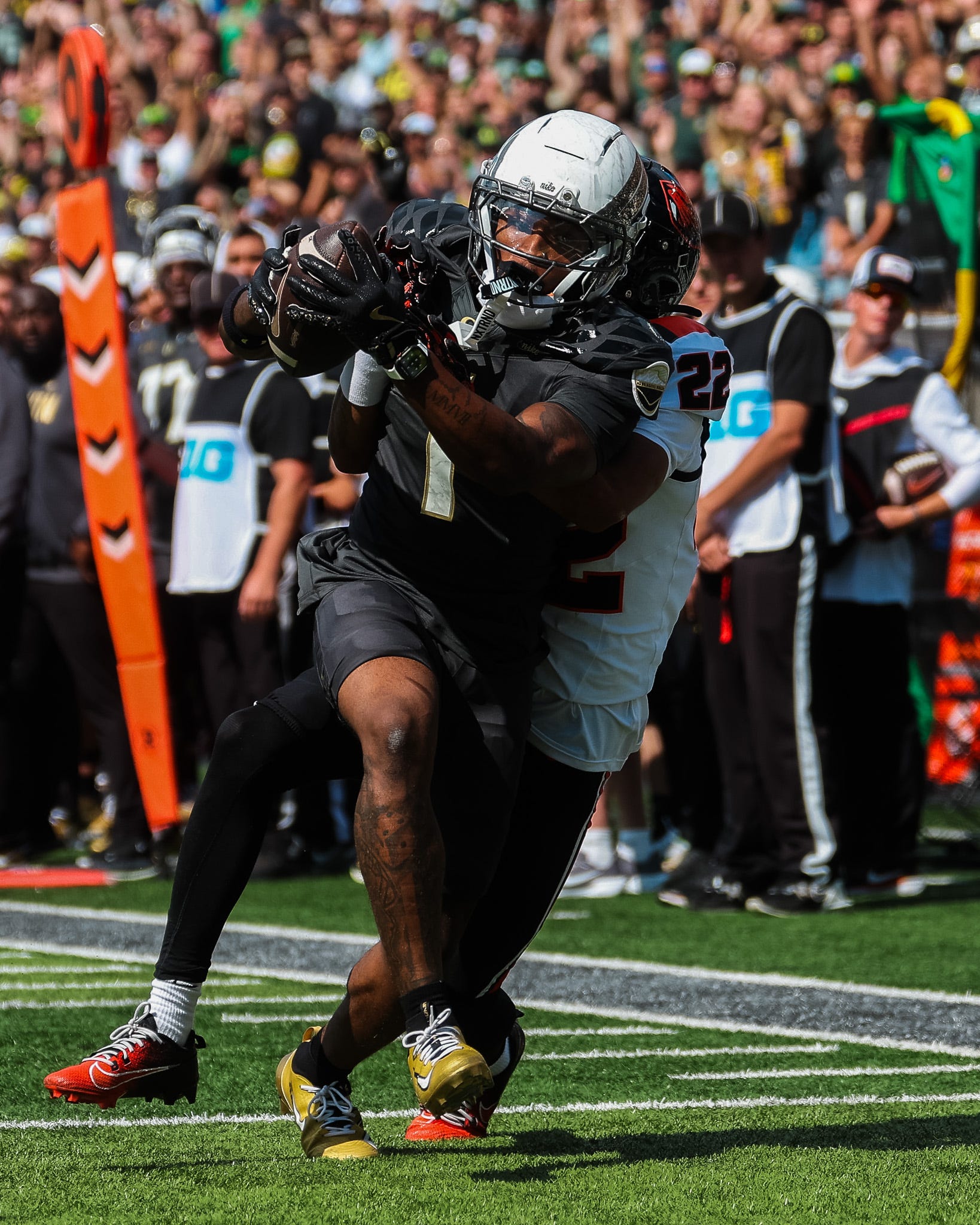
Last week in the Wednesday War Room, the conversation centered on Oregon’s defense and what I called the final step. The Ducks were already creating pressure at a high level, but to become the kind of defense capable of carrying a team to a national championship, they have to turn more of that pressure into sacks, negative plays and drive-ending production.
This week, the conversation shifts to the offense, but the framing has to change. This is not a final step conversation because Oregon’s offense does not need to prove it can be good. It has already done that. The Ducks have been one of the most efficient and productive offenses in the country over the last several seasons, and the numbers support what the eye test has shown. Oregon has consistently been explosive, accurate, efficient and difficult to defend in space.
That is why this is not about repair. It is about evolution.
The next version of Oregon’s offense under Drew Mehringer does not need to become something completely different from what it has been under Dan Lanning. That would be an overreaction. Oregon’s offensive identity has worked because it has created answers. The Ducks have built an offense around efficiency, quarterback accuracy, run-pass conflict, space, tempo, tight end versatility and enough explosive ability to punish defenses that lose leverage.
But there is a difference between having answers and staying ahead of the questions.
That is the challenge for Oregon in 2026. The Ducks are not trying to catch up offensively. They are trying to prevent the rest of the sport from catching up to them.
