


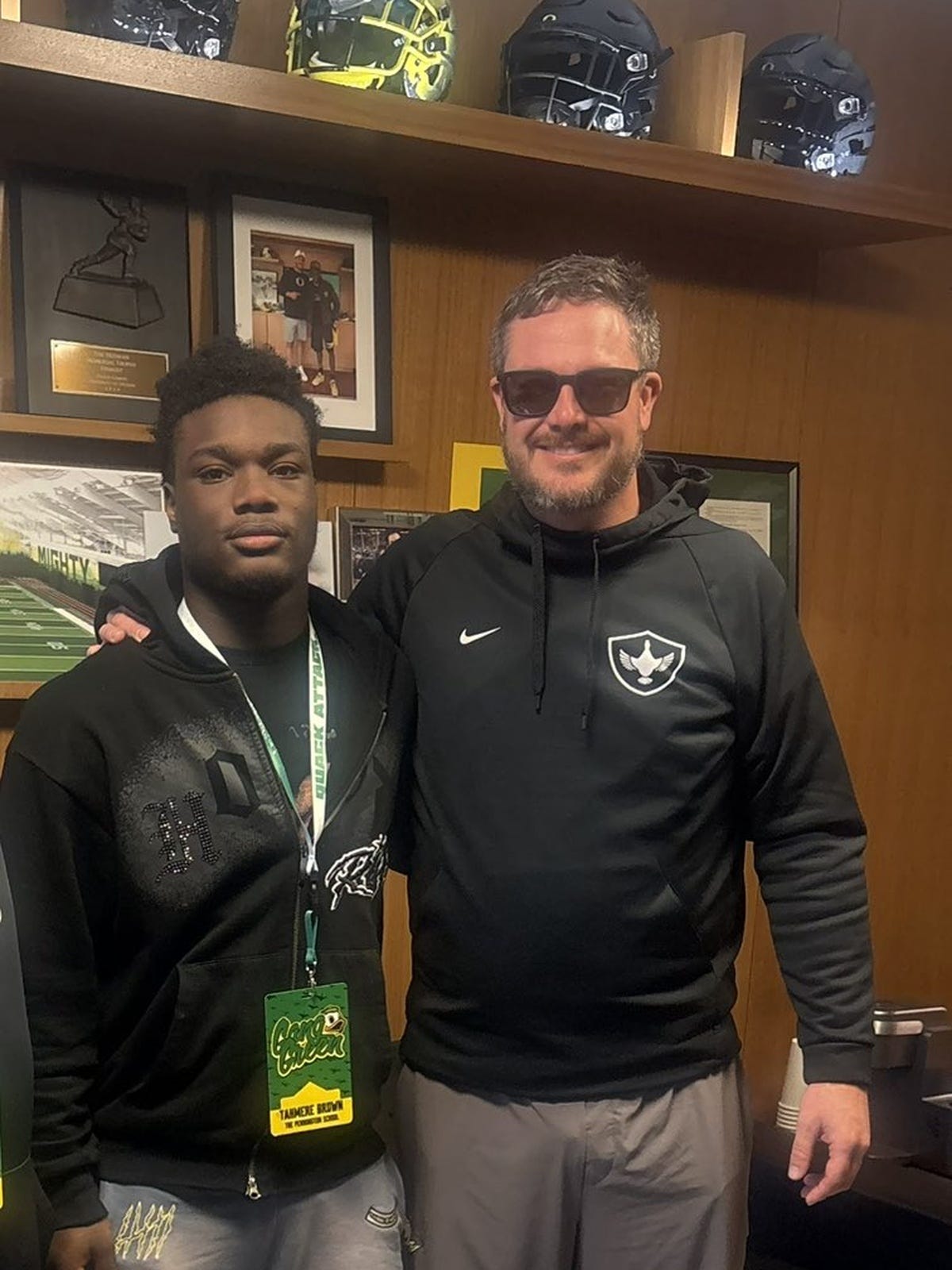
There are not many elite running backs emerging on the West Coast in the 2028 recruiting cycle. In fact, only two of the top 25 players at the position can reasonably be classified as West Coast prospects, and both appear on Oregon’s early board.
That scarcity matters.
Oregon has assembled one of the country’s deepest and most versatile running back pipelines by combining high-level evaluation with national recruiting reach. The Ducks have not needed every back to come from the same region or fit one narrow physical profile. They have pursued power, speed, receiving ability and positional flexibility, then trusted their developmental structure to turn those traits into a complete backfield.
The 2028 cycle may require Oregon to lean even more heavily into that national approach.
There simply may not be enough high-end options close to home for the Ducks to build their class primarily through California and the Pacific Northwest. Oregon will still evaluate the West Coast thoroughly, but the early board points toward a much broader search. Texas is likely to receive significant attention, with several prospects already emerging as legitimate names to follow. The Ducks will also need to use their brand, facilities, offensive identity and recent recruiting momentum to pull backs from the South, Midwest and Northeast.
That does not necessarily mean Oregon needs to identify one clear-cut priority immediately. At this stage, the more important objective is building relationships, monitoring development and determining which players eventually fit the offense the Ducks expect to be running several years from now.
Today in the War Room, we continue our early look at the 2028 recruiting cycle with the running backs Oregon has already offered, evaluated or positioned itself to pursue.
