


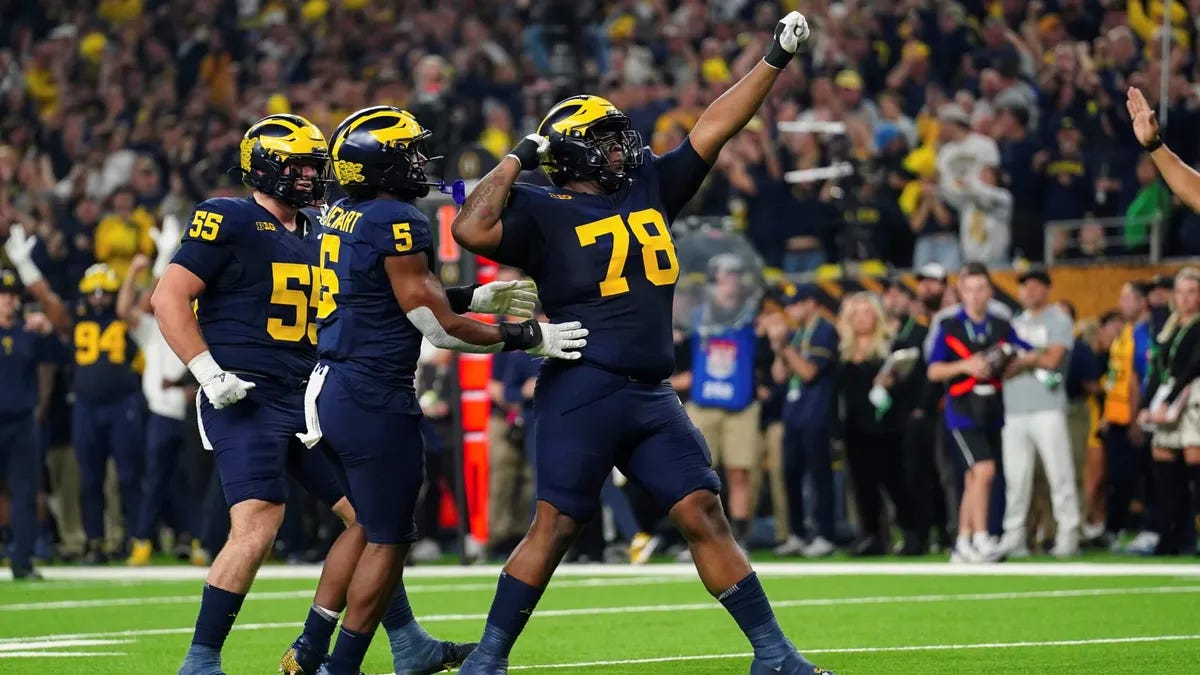
The Wolverines have struggled to score, changed offensive coordinators and reopened their quarterback competition. But their defense remains one of the nation’s best, creating a fascinating challenge for an Oregon team trying to build on its biggest win of the season.
There are few programs in college football more closely associated with a particular identity than Michigan. Physical football, strong defensive play, a commitment to the line of scrimmage and an expectation that opponents will have to earn just about everything they get have defined the Wolverines through generations of coaches and players.
That identity has survived a difficult first season under Kyle Whittingham. What hasn’t survived is Michigan’s ability to consistently produce points, and the disconnect between those two sides of the football has become one of the more remarkable stories in the Big Ten this season.
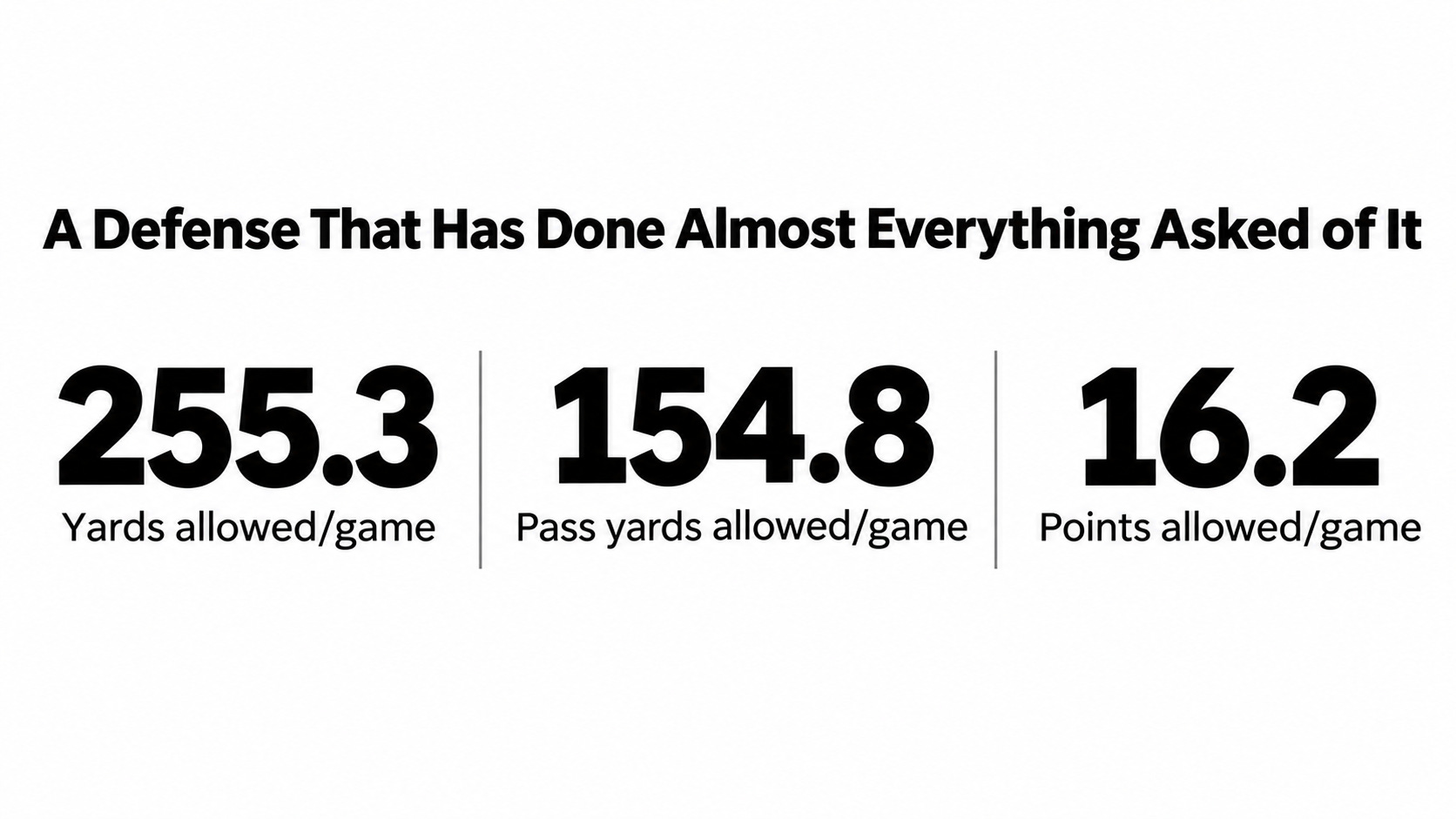
The Wolverines arrive in Eugene with a 5-4 record, having lost four of their last six games. They’ve scored just six points in each of their last two losses, yet remain one of the most difficult teams in the country to move the football against. Their defense ranks fourth nationally in total defense, allowing just 255.3 yards per game, while their offense averages only 302.6 yards and 19.6 points.
Those numbers tell the story of a team that has been good enough defensively to compete with almost anyone on its schedule, but rarely capable of providing the offensive support necessary to finish the job.
For Oregon, Saturday represents a considerably different challenge than the one the Ducks faced in Columbus last weekend. After producing a remarkable comeback against Ohio State, Dan Lanning’s team returns to Autzen with renewed confidence and a postseason opportunity that looked increasingly distant only a few weeks ago.
The Ducks are 6-3 overall and 4-2 in Big Ten play, with consecutive victories over ranked opponents. Now comes the challenge of maintaining that momentum against a Michigan team whose record is considerably less impressive than its defensive capabilities.
Michigan’s defensive production is not the result of playing a particularly favorable schedule. The Wolverines have faced Oklahoma, Iowa, Indiana, Penn State and Michigan State, and have held every one of those opponents to 20 points or fewer. In fact, Rutgers is the only team to score more than 20 points against Michigan all season.
Perhaps the most revealing statistic comes from the Wolverines’ losses. Michigan held Iowa to 20 points, Minnesota to 20, Indiana to 13 and Michigan State to 15. In those four games, the defense surrendered a combined 68 points, an average of just 17 per contest, yet the Wolverines lost all four.
The front seven has been particularly effective. Michigan allows just 100.6 rushing yards per game and 3.0 yards per carry, forcing opponents into obvious passing situations where a combination of pressure and talented defensive backs can take over.
John Henry Daley, who followed Whittingham from Utah, has become one of the central figures in that effort. Daley has registered six sacks and nine tackles for loss in eight games, including two sacks and 2.5 tackles for loss against Michigan State last weekend. He has the explosiveness to disrupt plays off the edge and enough versatility to create problems when offenses attempt to account for him with additional protection.
The Wolverines also have capable defenders in Dom Nichols, Tariq Boney and Jonah Lea’ea, giving Michigan several options for attacking protection schemes. In the secondary, Zeke Berry, Jyaire Hill and Rod Moore provide experience and coverage talent that complement the pressure generated up front.
For Oregon, the most important question might not be whether it can create explosive plays against Michigan, but whether it can consistently create manageable situations on early downs. Against a defense capable of winning individual matchups across the line of scrimmage, second-and-long and third-and-long can quickly become drive-ending situations.
The Ducks cannot assume the offensive rhythm they found against Ohio State will automatically carry over against a defense built to eliminate easy opportunities. They will need to establish enough balance to keep Michigan from dictating the terms of every possession.
Michigan’s defensive numbers and personnel production are documented in the university’s official season statistics and weekly game notes.
An Offensive Identity Crisis Arrives in Eugene
Michigan’s offense has become an unusual combination of talented players, inconsistent execution and uncertainty at the most important position on the field.
The Wolverines have generated only seven passing touchdowns through nine games, compared with nine interceptions. Their 61.4% completion rate is hardly disastrous, but the offense has struggled to turn completions into sustained production and, more importantly, points.
Whittingham’s decision to reopen the quarterback competition between Bryce Underwood and Tommy Carr reflects the uncertainty. Underwood began the season as the starter, completing 72 of 124 passes for 924 yards, five touchdowns and six interceptions. Carr has completed 63 of 94 attempts for 641 yards, two touchdowns and three interceptions, offering a higher completion percentage but relatively little improvement in overall scoring production.
Carr’s performance against Rutgers suggested Michigan might have found an answer. He completed 22 of 27 passes, setting a Michigan freshman starting-quarterback record with an 81.5% completion rate. A week later, against Michigan State, he completed just 14 of 26 passes for 138 yards and two interceptions. Michigan managed 192 total yards, converted only two of 10 third-down attempts and lost 15-6.
The response was dramatic. Whittingham dismissed offensive coordinator Jason Beck on Sunday, replacing him with interim coordinator Jim Harding for the remainder of the regular season. The move means Oregon must prepare not only for two quarterbacks, but also for the possibility of changes in Michigan’s offensive approach.
Neither quarterback should be dismissed simply because of the statistical struggles. Underwood arrived at Michigan as one of the most highly regarded recruits in the country, while Carr has demonstrated enough accuracy and athletic ability to create problems when the offense finds a rhythm.
The concern for Michigan is that neither has consistently handled the pressure of carrying an offense that has lost its ability to rely on a dominant running game.
Jordan Marshall, who averaged more than six yards per carry a season ago, has managed just 323 yards on 88 attempts this year. Freshman Savion Hiter has increasingly become the more productive option, but the Wolverines have struggled collectively to replace the effectiveness of last season’s ground attack.
Michigan averages just 128.7 rushing yards per game and 3.6 yards per carry, a significant decline for a program accustomed to building its offense around physical running and manageable passing situations.
The Wolverines have been better on third down than their overall offensive numbers might suggest, converting 41.9% of their opportunities. The problem has been translating those extended drives into touchdowns. Michigan has scored touchdowns on just 15 of its 26 red-zone possessions, and its placekicking has been equally inconsistent, with six successful field goals in 11 attempts.
For Oregon’s defense, the opportunity is obvious. Matayo Uiagalelei and Teitum Tuioti have combined for 13 sacks this season, and the Ducks have recorded multiple sacks in eight of their nine games. The two outside linebackers, along with Bear Alexander, provide the kind of defensive front capable of making an already uncertain quarterback situation considerably more difficult.
If Oregon can limit Michigan’s rushing attack and force the Wolverines into predictable passing situations, it should have opportunities to dictate the game defensively. The Ducks have also been one of the nation’s most reliable tackling teams this season, a particularly important strength against an offense likely to emphasize efficiency and shorter, manageable gains.
The One Offensive Matchup Oregon Cannot Ignore
While Michigan’s passing offense has struggled, JJ Buchanan has emerged as a legitimate threat capable of changing a game with a single reception.
The 6-foot-4 receiver has caught 40 passes for 646 yards and five touchdowns, averaging 16.2 yards per reception. His combination of size, physicality and ability to win contested catches gives either Michigan quarterback an opportunity to generate explosive plays even when the overall offense is struggling.
Andrew Marsh has been a valuable complement, recording 44 receptions for 413 yards. Together, Buchanan and Marsh account for nearly 68% of Michigan’s receiving yardage, making them the primary concerns for Oregon’s secondary.
The Ducks have been effective at limiting opposing passing attacks through a combination of pressure and sound coverage, with Ify Obidegwu and Na’eem Offord among the Big Ten leaders in passes defended. The key against Buchanan will be maintaining disciplined coverage and preventing contested catches from becoming the kind of explosive plays that can sustain a struggling offense.
Michigan has produced only 22 offensive plays of 20 yards or longer all season, with 18 coming through the air. That creates an interesting challenge for Oregon’s defense. The Wolverines have not consistently demonstrated an ability to string together productive drives, but their receivers are capable of making defenses pay for isolated mistakes.
The Other Quarterback Battle
While Michigan searches for answers at quarterback, Oregon appears to be finding some of its own.
Dylan Raiola has delivered two of his most productive performances since taking over the starting role following Dante Moore’s injury, completing 47 of 71 passes for 593 yards, five touchdowns and no interceptions against Northwestern and Ohio State.
The numbers have been impressive, but the circumstances surrounding them might be even more significant. Oregon trailed by 14 points in both games, only to rally behind an offense that has shown considerably more confidence and cohesion as the season has progressed.
Against Ohio State, Raiola threw for 257 yards and two touchdowns while Oregon produced 38 consecutive points in its 41-28 victory. The Ducks did not surrender a sack, and their offense repeatedly created opportunities after a difficult opening quarter.
Michigan’s defense presents a different test. The Wolverines have allowed only 18 rushing plays of 10 or more yards through nine games and surrender just 154.8 passing yards per contest. Their defensive success is built on preventing explosive gains and forcing opponents to sustain drives against a disciplined, physical unit.
Oregon’s offensive line, which has now gone consecutive games without allowing a sack, will face an important challenge against Daley and the Michigan front. Just as importantly, Raiola will need to recognize when the defense offers opportunities downfield and when the better decision is to accept shorter gains.
The emergence of Dakorien Moore as a consistent receiving threat has helped Oregon’s passing attack, while Dierre Hill Jr. gives the Ducks the kind of explosiveness out of the backfield capable of testing Michigan’s pursuit angles and gap discipline.
There may not be many easy yards available Saturday. Oregon’s ability to manufacture them without exposing itself to negative plays could determine how much pressure Michigan’s offense ultimately faces.
A Game That Could Be Decided by Possessions
One of the more intriguing aspects of Saturday’s matchup is how differently these teams have arrived at this point in the season.
Oregon has recently found ways to win games in which it fell behind early. Michigan has found ways to lose games despite receiving the kind of defensive performances that ordinarily produce victories.
The Wolverines have allowed only 16.2 points per game, yet their offense has been held below 20 points in seven of nine contests. Against Indiana and Michigan State, Michigan allowed a combined 28 points in regulation but scored only 12.
Those numbers underscore how narrow the margin for error has become.
For Michigan, every turnover, missed field goal or failed red-zone opportunity carries considerable weight because the offense has not demonstrated the ability to overcome those mistakes consistently. For Oregon, the challenge is avoiding the assumption that Michigan’s offensive struggles make the game an easy assignment.
A couple of early turnovers, an explosive pass to Buchanan or a defensive takeaway could allow the Wolverines to play the kind of slow, physical contest that keeps the score close deep into the second half.
That is precisely the sort of game Michigan’s defense is capable of producing.
The Bigger Picture
Oregon’s victory over Ohio State changed the conversation surrounding the Ducks’ season. After a 4-3 start created legitimate questions about whether this team could recover from its early struggles, consecutive victories over ranked opponents have restored some of the possibilities that appeared to be slipping away.
Saturday offers an opportunity to build on that momentum, but it also introduces a different kind of challenge. The emotional intensity of winning in Columbus is difficult to replicate, and Michigan’s record makes it tempting to view the Wolverines as a considerably less dangerous opponent.
The numbers suggest otherwise, at least on one side of the football.
Michigan’s defense is talented enough to disrupt Oregon’s offense, create uncomfortable situations and make this a far more competitive contest than the overall records might indicate. The Wolverines simply have not demonstrated the offensive consistency necessary to take advantage of those performances.
For Oregon, the formula is not particularly complicated. Protect the football, remain patient offensively, make Michigan’s quarterbacks operate under pressure and force the Wolverines to sustain drives rather than allowing explosive plays to change the game.
The Ducks have shown over the last two weeks that they can overcome adversity against quality opponents. Now they have to demonstrate that they can handle a different expectation, one in which they enter as the stronger team with an opportunity to take another step toward the postseason.
Michigan will bring a championship-caliber defensive effort to Autzen. Whether the Wolverines can bring enough offense to support it remains the central question heading into Saturday.
And for Oregon, perhaps the most important measure of its progress will be whether it can make that question irrelevant.