


Illinois brings an efficient passing attack and a vulnerable defense into Saturday’s meeting, while Oregon’s season-long averages conceal an offense still searching for consistency. The advanced numbers reveal where the Ducks have an advantage, where the Illini can fight back and which matchups could determine the outcome.
Saturday, October 24, 2026: Noon PT, Gies Memorial Stadium, Big Ten Network
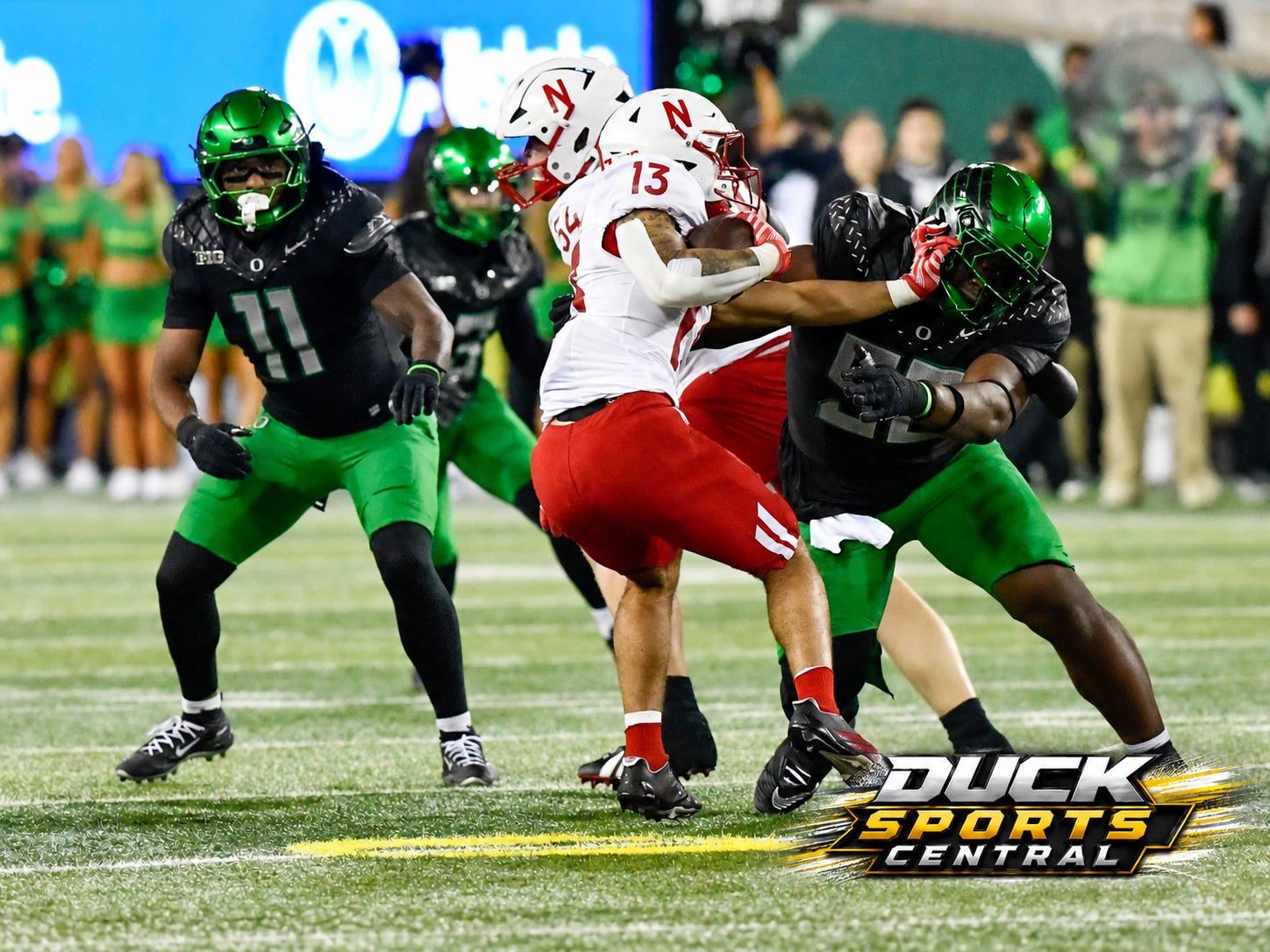
Oregon’s 17-14 victory over Nebraska provided something the Ducks desperately needed, but it also illustrated why evaluating this team through conventional statistics has become increasingly complicated. A program averaging 37 points per game needed a fourth-quarter quarterback change and a 20-play touchdown drive to escape a game in which it had managed only 91 yards through three quarters.
That isn’t necessarily evidence that Oregon’s offense is fundamentally incapable of producing at a high level. It is evidence that season averages can disguise significant changes in personnel, performance and reliability, particularly when one game against Portland State accounts for 84 of the Ducks’ 222 points.
Illinois presents an equally interesting statistical contradiction. The Fighting Illini average more than 400 yards of offense and have one of the Big Ten’s most productive receiving duos, yet their defense has struggled to get off the field, their pass rush has generated almost no sacks and their 3-3 record reflects a team capable of competing without consistently controlling games.
For Oregon, the obvious opportunity comes against an Illinois defense that has allowed opponents to sustain drives at an alarming rate. For Illinois, the opportunity comes from an Oregon offense that has repeatedly struggled with early-down efficiency, third-down execution and turnovers, despite possessing a clear advantage in overall talent.
The numbers suggest
