


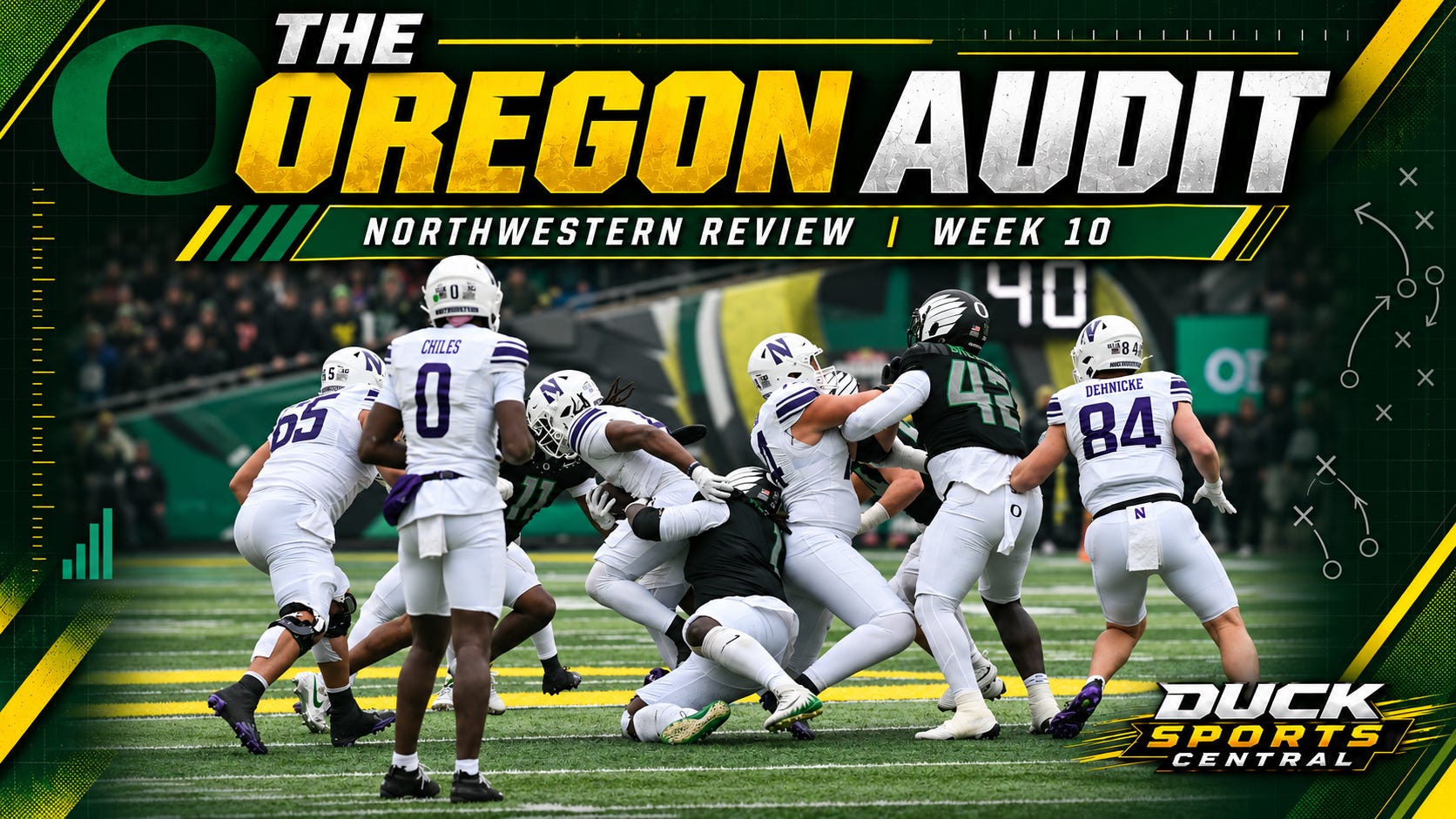
For much of Saturday afternoon, Northwestern appeared to be controlling the kind of game Oregon has struggled to win throughout this season. The Wildcats were extending possessions, Aidan Chiles was creating opportunities with his legs, and Chip Kelly’s offense was consistently finding ways to challenge the Ducks’ defensive discipline.
At halftime, Northwestern held a 20-13 advantage, and there wasn’t much statistical evidence suggesting Oregon was suddenly going to turn things around. The Wildcats had dictated the tempo, converted third downs at an alarming rate and created enough offensive pressure that the Ducks seemed to be spending more time reacting than imposing their own will.
Then something changed in the second half, and the transformation was reflected in far more than the scoreboard. Oregon’s defense began forcing Northwestern into less favorable down-and-distance situations, Dylan Raiola found opportunities to attack vertically, and Brandon Smith provided the kind of explosiveness from the running back position that had been missing from the offense.
The result was a 34-26 victory that looked considerably different in the advanced numbers than it did in the conventional box score. Northwestern finished with more yards, more first downs, more offensive plays and nearly 12 additional minutes of possession, while Oregon lost the turnover battle and continued struggling to establish a consistently productive rushing attack.
Yet the Ducks scored eight more points and averaged considerably more yardage every time they snapped the football. That contrast is where this week’s Oregon Audit begins, because understanding how Oregon won despite losing several traditional statistical categories tells us considerably more about its offensive improvement than the final score alone.
