


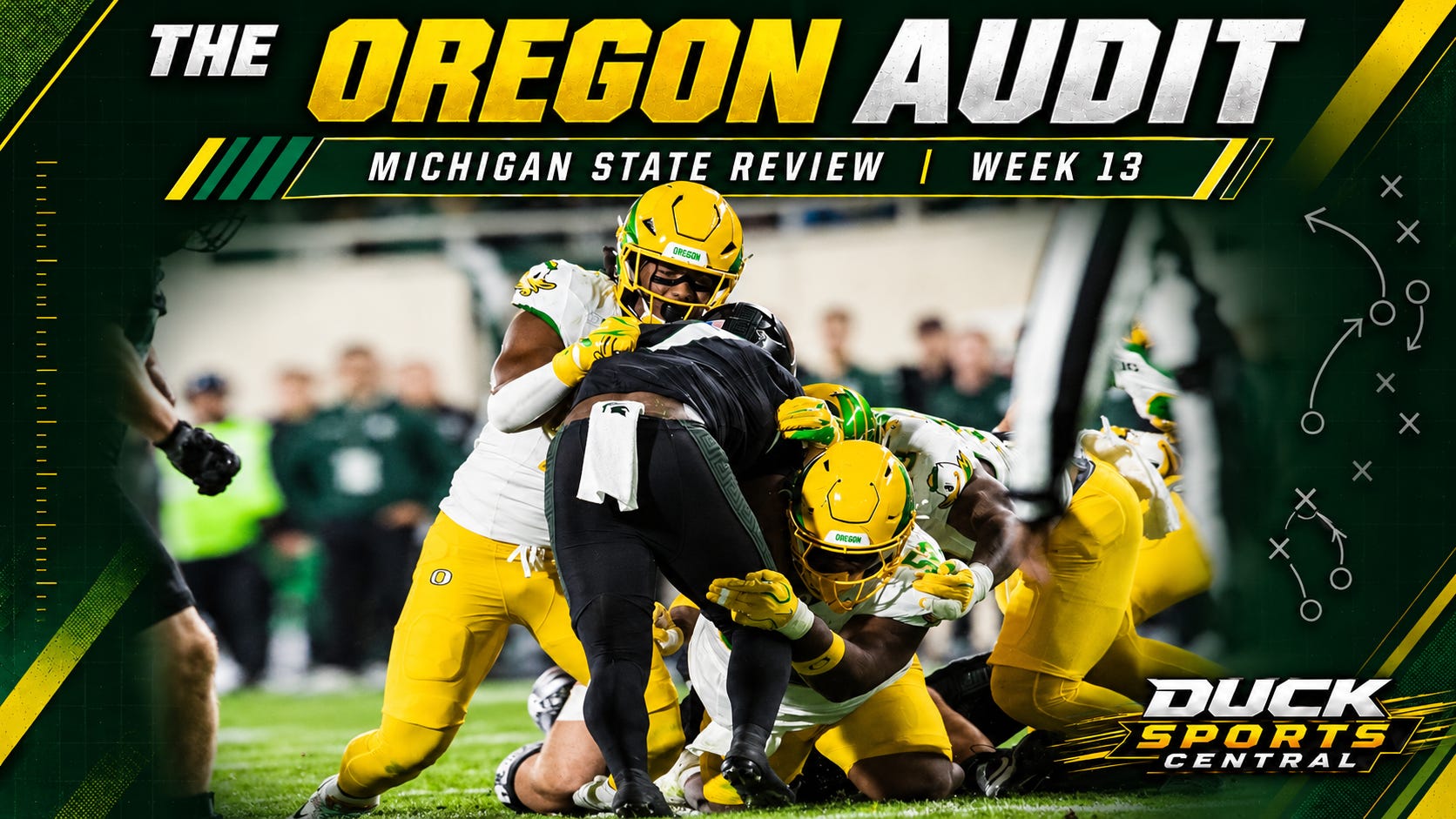
Oregon dominated Michigan State on the scoreboard, but the numbers reveal a more interesting story about individual performance, second-half adjustments and the areas that still need attention before Washington.
A 45-7 victory makes it easy to hand out high grades, particularly when Oregon outgains an opponent 422-200 and holds that team to just 3.3 yards per play. There wasn’t much doubt about which team was better Friday night in East Lansing, and by the time the fourth quarter arrived, the Ducks had turned what was initially a frustrating game into a convincing victory.
But if we’re going to evaluate the performance honestly, we can’t allow the final score to erase what happened along the way. Michigan State created legitimate problems for Oregon’s offense during the first half, particularly with pass protection and disciplined coverage. The Ducks also committed nine penalties for 75 yards, including several that helped extend the Spartans’ only touchdown drive.
Those mistakes didn’t threaten the outcome against Michigan State, but they deserve attention with Washington coming to Autzen Stadium. What I found encouraging was how Oregon responded, with the offensive staff adjusting its approach, the running backs taking advantage of their opportunities and the defense continuing to limit Michigan State’s ability to generate anything explosive.
The advanced numbers support much of what we saw, although they also reveal some differences between the units that contributed to the victory. That’s where this week’s Audit becomes particularly interesting, because a dominant final score doesn’t necessarily mean every position group delivered the same level of performance.
