


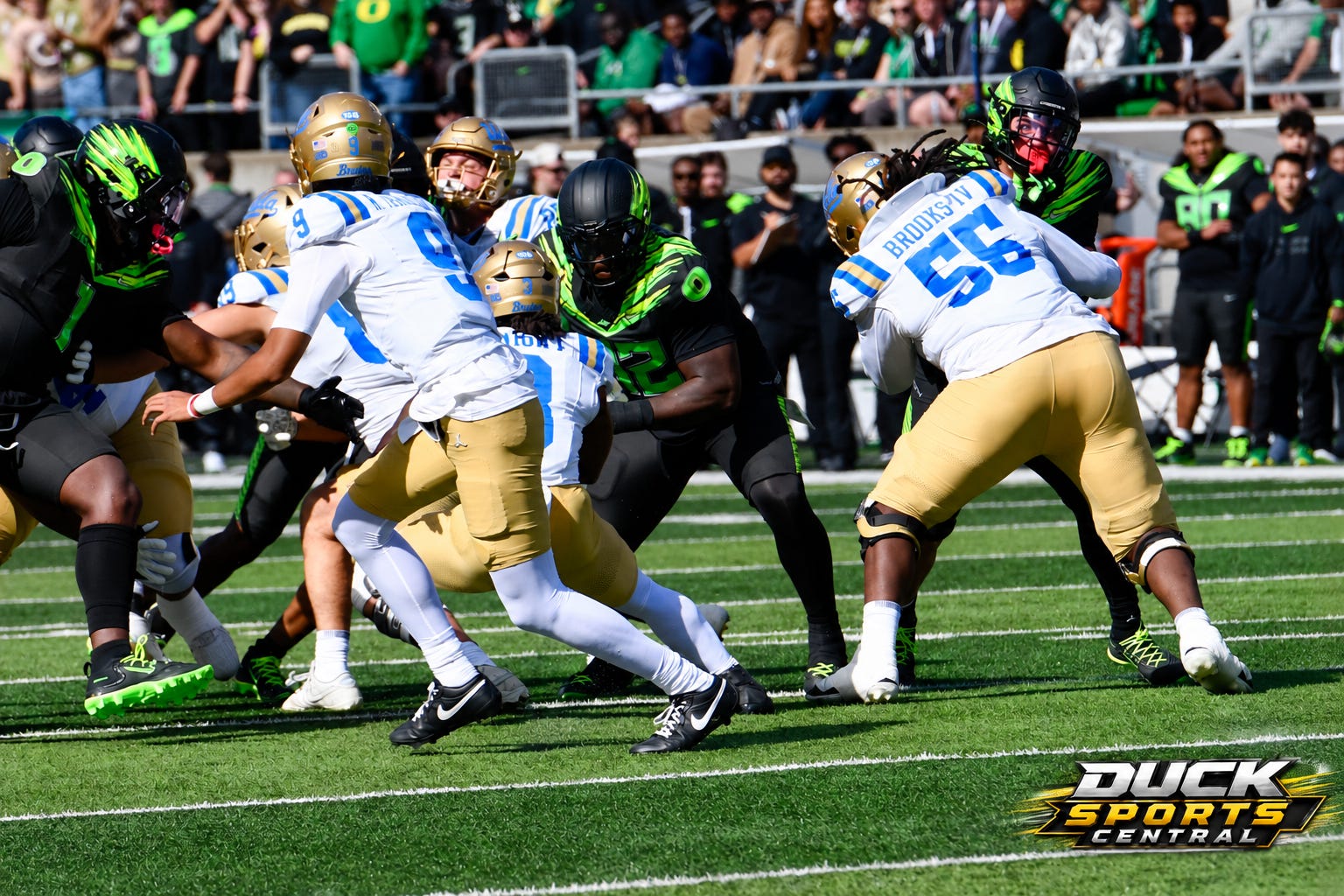
There was a moment late in the third quarter Saturday when UCLA’s players were dancing to “Shout” inside Autzen Stadium, participating in a tradition normally reserved for celebrating another Oregon victory. On the opposite sideline, the Ducks gathered without much enthusiasm, watching a game that had slowly slipped away from them despite a defensive effort that had repeatedly provided opportunities to change its direction.
By then, the outcome felt almost inevitable. Oregon’s offense had spent the afternoon searching for something resembling an identity, moving between formations and concepts without ever establishing a dependable way to attack UCLA’s defense. Dylan Raiola was struggling to make accurate throws, the offensive line was losing too many individual battles and the Ducks had become their own worst enemy with a seemingly endless collection of turnovers. What made the moment particularly striking was that Oregon trailed by only 11 points, a deficit that ordinarily would have seemed manageable for a team with this much offensive talent.
Brock Thomas eventually provided enough life to make the closing minutes interesting, but Oregon’s 17-15 loss was not decided by the failed 2-point conversion following Evan Stewart’s fourth-quarter touchdown. It was the accumulation of everything that happened before that moment, from questionable offensive decisions to missed opportunities and an inability to establish any consistency against a UCLA team that was better prepared to dictate the terms of the game.
Dan Lanning offered the most revealing assessment afterward
