


Take One: When the Loss Becomes Information
There is a funny thing about setbacks when viewed through the lens of a career.
We usually talk about them in dramatic terms. Someone loses a job, gets passed over for a promotion or watches a major opportunity disappear. Then, after the person recovers, the experience becomes part of a polished story about perseverance. We see the finished version on LinkedIn or Facebook, where the setback is transformed into the obstacle that supposedly made everything good that followed possible.
Real life is usually more complicated.
Sometimes setbacks are not defining moments. They are simply unpleasant things that happen. A company loses a piece of business. A project falls apart. A position someone expected to receive goes to somebody else. There may still be value hidden inside the disappointment, but that value does not always reveal itself immediately.
Losing business, for example, is rarely something anyone celebrates. Yet it can create the capacity to spend more time strengthening the core business. It can reveal where an organization had become stretched too thin, where attention had drifted or where growth had begun to outpace the systems supporting it.
The loss itself was not good. What became possible because of it might be.
That distinction matters when considering what Oregon should make of the way its past two seasons ended.
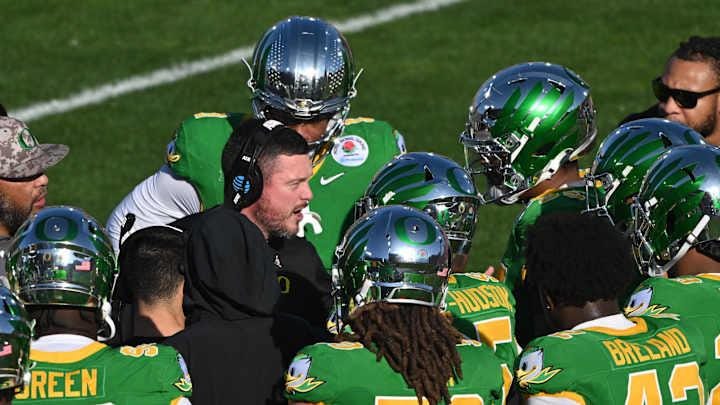
The Ducks did not merely lose consecutive playoff games. They were overwhelmed in both. Ohio State scored 34 first-half points in a 41-21 Rose Bowl victory following the 2024 season. One year later, Indiana led Oregon 35-7 at halftime and ended the Ducks’ season with a 56-22 victory in the Peach Bowl semifinal.
There is no useful reason to soften those outcomes. They were blowouts on the biggest stage, and each exposed a version of Oregon that looked far less prepared for the moment than the program had throughout the season.
But the losses do not have to mean Oregon has reached its ceiling.
