


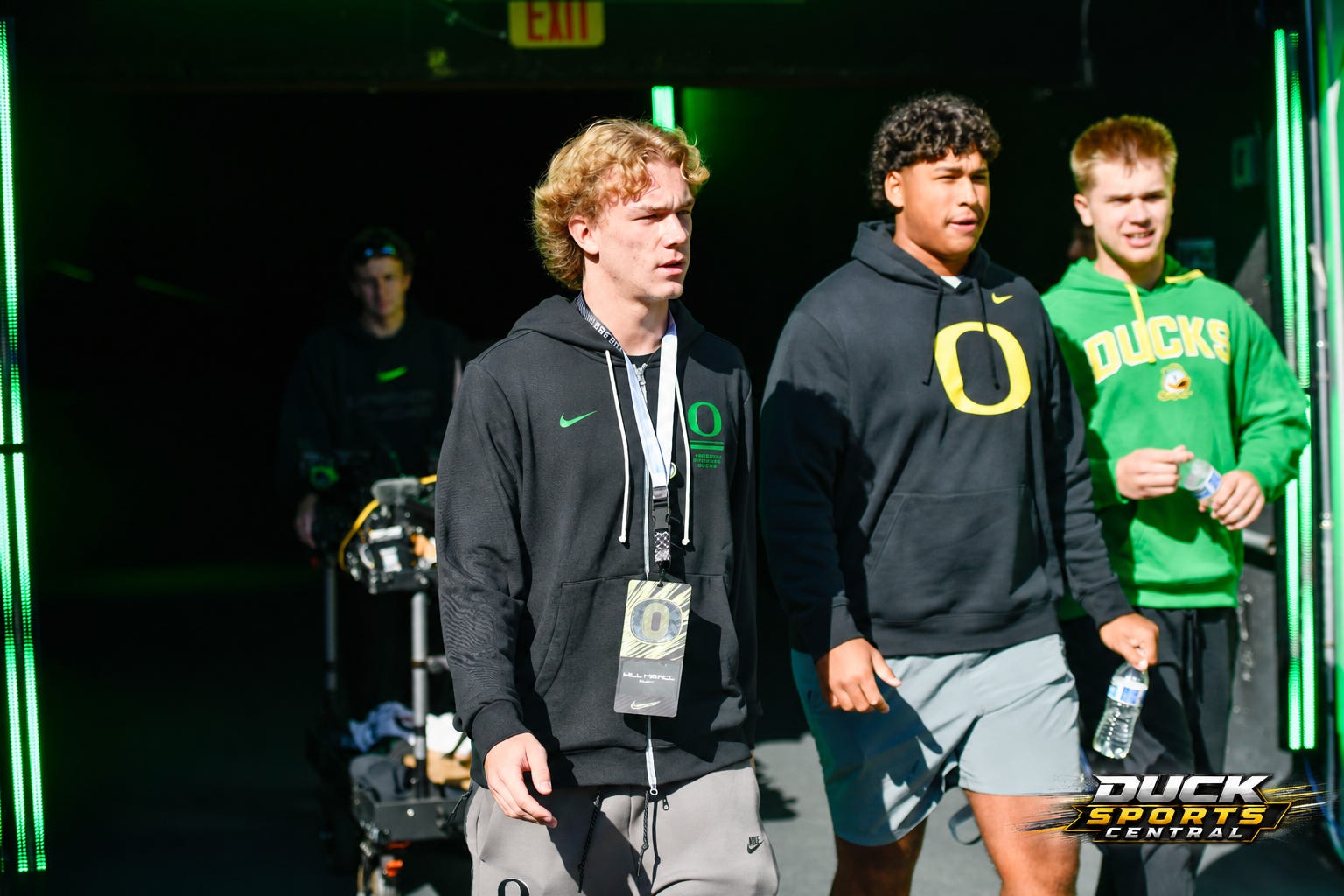
There is something about the intersection of recruiting and actual football that makes these big weekends particularly interesting. For months, coaching staffs build relationships, explain their vision for a program and attempt to convince talented young players that the experience waiting for them on campus will match everything they have been promised. Then comes a Saturday when those prospects can finally see what much of that preparation looks like under the most demanding circumstances.
For Oregon, Saturday was supposed to provide one of those moments. The Ducks were hosting a ranked UCLA team in their Big Ten home opener, unveiling their all-black Origin of Speed uniforms and welcoming an exceptional collection of prospects from the 2027 and 2028 recruiting classes. Many were already familiar with Dan Lanning and his staff, but others were getting their first opportunity to experience Autzen Stadium with something meaningful at stake.
The stage was exactly what Oregon wanted, even if the performance that followed was anything but.
UCLA’s 17-15 victory left Oregon with legitimate questions about its offensive preparation, quarterback play and ability to capitalize on opportunities created by its defense. Seven turnovers and an offense that struggled for most of the afternoon were hardly the kind of performance Lanning would have preferred to showcase in front of some of the nation’s most coveted recruits, particularly when several offensive prospects were evaluating the program’s ability to develop players at their positions.
But recruiting rarely operates according to the emotional timeline that accompanies a disappointing football result. Fans tend to evaluate what happened Saturday through the immediate consequences of winning or losing, while prospects are making decisions that could determine where they spend several years of their lives. Their evaluations involve relationships that have been developing for months, sometimes years, along with questions about playing time, development, coaching philosophy and whether the program they are considering will provide the right environment for their future.
That distinction became especially important as reports from the visiting prospects began emerging Saturday evening and into Sunday. Rather than a collection of players reconsidering Oregon because of the loss, the early feedback reflected continued confidence in the coaching staff, appreciation for the atmosphere and considerable interest in the defensive performance. There were also reminders that the most important recruiting work often happens away from the field, particularly when coaches have to demonstrate that their message remains consistent after things do not go according to plan.
As we discussed in Friday’s recruiting primer, the primary objective of the weekend was never
