


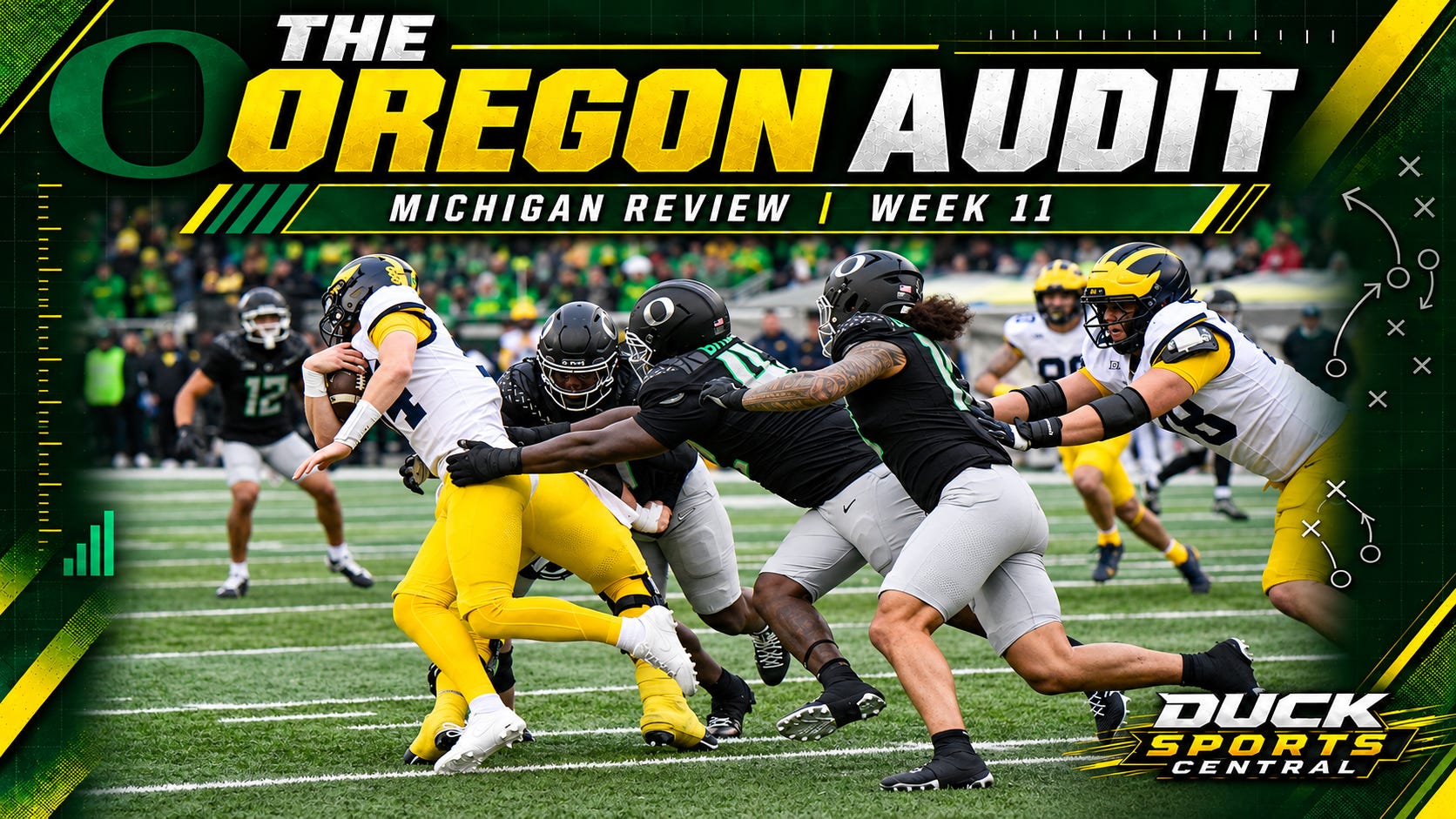
Oregon’s 31-7 victory over Michigan was convincing by almost every traditional measure. The Ducks outgained the Wolverines 467-286, forced two turnovers without committing one and held Michigan scoreless for the final three quarters. Dylan Raiola threw four touchdown passes, the defense repeatedly disrupted Michigan’s offense and Oregon controlled the outcome without requiring another dramatic comeback.
But the Oregon Audit is not designed to reward a team simply because it wins comfortably. The objective is to examine the execution behind the result, identifying what is sustainable, what required exceptional individual performances and what still needs improvement. Traditional statistics provide context, but advanced metrics help us understand the relationship between individual plays, scoring opportunities and the efficiency of the systems that produced them.
This week’s evaluation incorporates play-by-play efficiency, predicted points added (PPA), success rates, line yards, havoc, situational performance and scoring-opportunity conversion. Those measurements are considered alongside opponent quality, schematic execution and the circumstances surrounding individual plays rather than being treated as an automatic grading formula.
The result is a fascinating contrast. Oregon’s passing offense operated at an exceptional level, its rushing efficiency remained inconsistent and its defense created an overwhelming advantage through pressure and coverage. The Ducks were clearly the better team, but the underlying performance demonstrates why Dan Lanning continues to insist that Oregon has not yet played its best football.
