


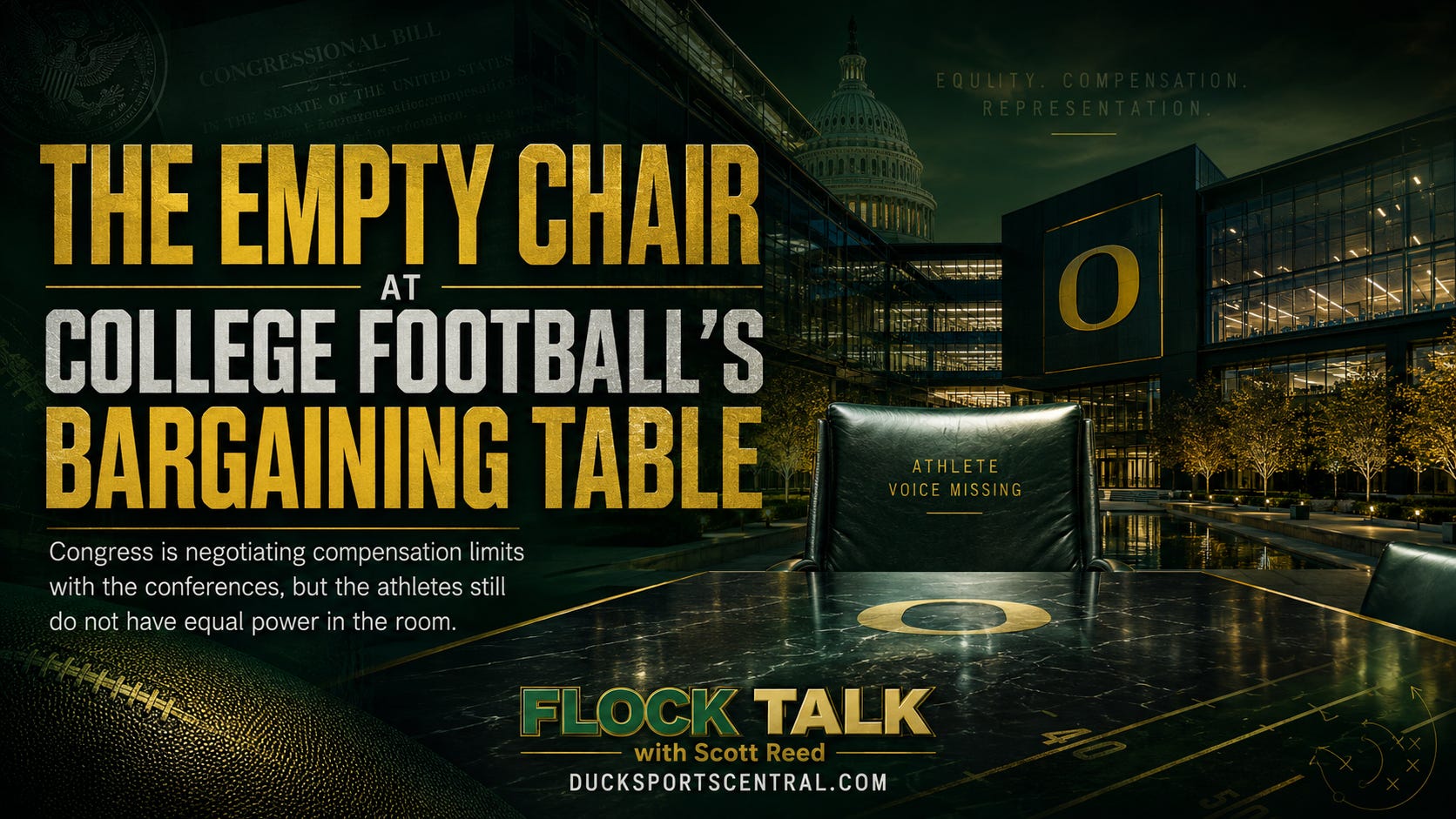
The more I have followed the Protect College Sports Act, the more I have come back to one question that has not received nearly enough attention: Who is actually negotiating the future of college athletics?
It would be inaccurate to say athletes have not been included at all. Athletes have testified before Congress. Athlete advocacy groups have submitted opinions and publicly opposed portions of the legislation. The bill itself would require athlete representation on certain NCAA governing boards and rulemaking committees.
That is inclusion. It is not negotiation.
Over the past several weeks, and especially during the final push to move the bill before the Senate’s August recess, lawmakers have been communicating directly with conference commissioners, university presidents, athletic directors and other institutional leaders. The Big Ten and SEC have been receiving revised language, submitting concerns and evaluating whether the changes are sufficient for them to support the legislation.
As of Thursday morning, the latest version had reportedly been sent to the Big Ten and SEC as a “best and final” proposal. Congressional staff, White House attorneys and conference representatives had worked through the previous night on language involving compensation limits, associated entities, antitrust protection, state-law preemption and other provisions.
There has been no corresponding group of current athletes receiving each revision, discussing it across a broad membership, returning counterproposals and determining whether the legislation has earned player support.
That is the empty chair at the table.
